Institut Carpe Kairon
Antiquity brought to life
We are an independent educational institution whose aim is to keep the cultural heritage of ancient languages and literature alive, to pass it on, and to make it relevant to modern society. To this end, we are delighted to share here the experiences and insights we have gained whilst studying ancient texts. We hope to rekindle a greater interest in antiquity and to share our enthusiasm and fascination with you.
Why learn ancient languages today?
Ancient languages and texts
sharpen the mind
and inspire the soul.
Language as a mental tool
Classical languages are extremely complex yet subtle intellectual tools. Through them, we can access realms of thought and imagination that are often difficult, or far more difficult, to grasp in modern languages.
Learning ancient languages means honing one’s mental faculties.
The Treasure of Literature
In antiquity, philosophy and poetry often reached their greatest heights to date. Reading the works of Plato or Homer, for example, in the original language provides spiritual pleasure and intellectual insights that are second to none.
Reading ancient literature means savouring the most precious fruits for the mind and soul.
Understanding of language and culture
Classical antiquity forms the foundation of European culture; the ancient languages are the key to every modern Indo-European language. Modern German language and culture, for example, can only be understood in the context of antiquity.
Ancient languages and literature are the key to a genuine modern sense of identity.
Discover the thinking of ancient authors.
At a time when we are seeking a sustainable way of life, we seem to have completely forgotten that lasting happiness does not lie in consumption, but in the sublime exercise of our psychic and mental life forces.
Philosophy
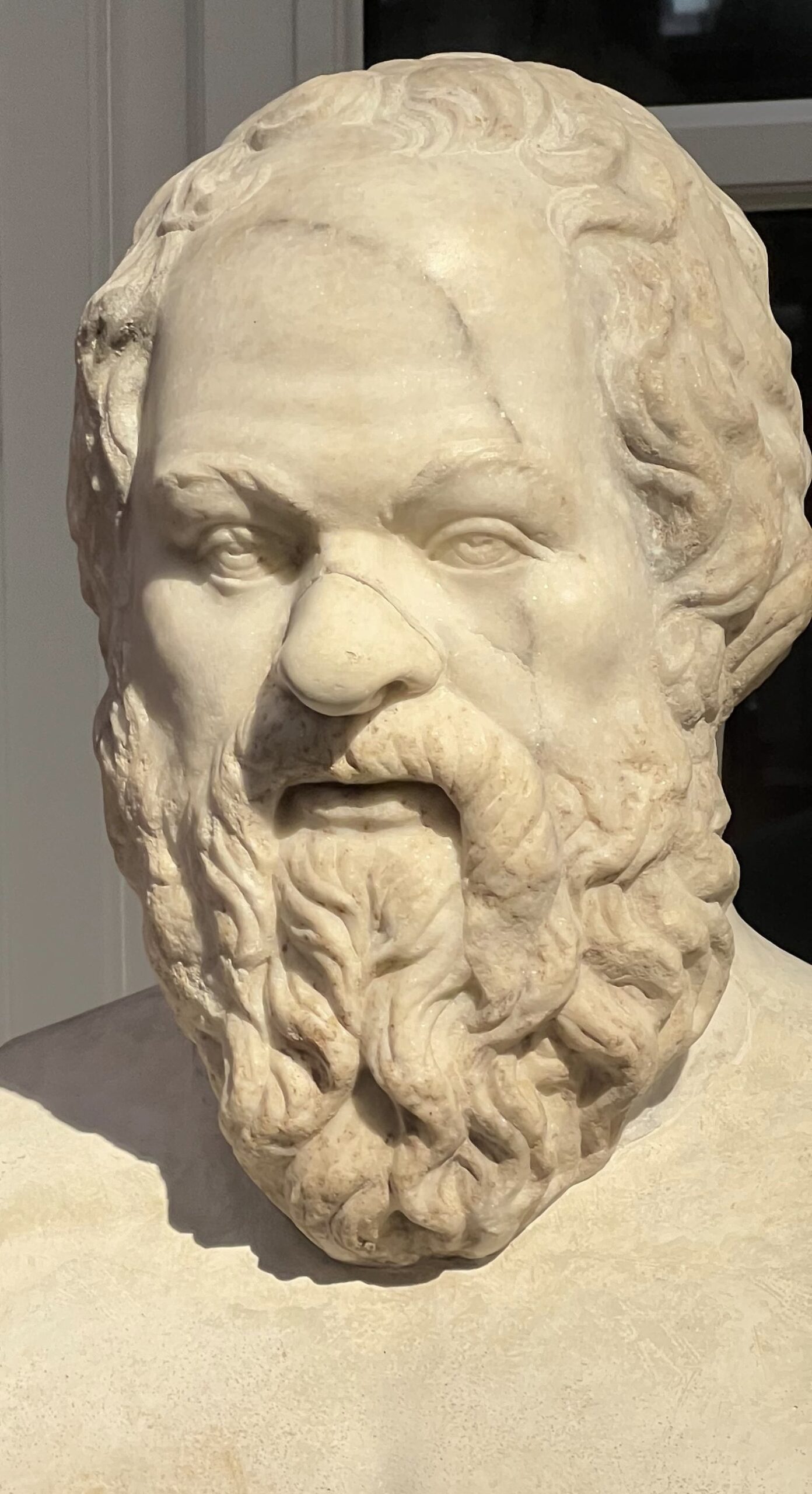
Ancient philosophy is diverse and never ceases to surprise us with its modernity: Democritus’s atomic theory, Protagoras’s relativism and Heraclitus’s flux theory are examples of this.
Plato’s philosophy, on the other hand, is in many respects not modern at all. All the more reason, then, for us to learn from it. For Plato’s dialogues gradually guide the persistent reader towards an understanding of that which is always the same, which has never come into being and never ceases to be. Platonic philosophy makes it possible to reflect rationally and meaningfully on the soul and the mind, God and the gods, justice and the good: without dogmatism, but also without relativism.
Poetry
Greek poetry, in particular, remains unrivalled in many respects to this day. The pleasure that arises from the inner experience when Homer’s epic verses evoke vivid images in the human soul cannot be put into words. Have you seen Christopher Nolan’s The Odyssey? The oppressive atmosphere of the film adaptation has little to do with Homer’s powerful hexameters and is, rather, an expression of our own time.
Like classical tragedies, epics do more than simply fill the reader’s soul with incredible stories and deep, subtle emotions. They also stir the imagination, have a lasting effect on the reader’s mental world, and shed light on the inner lives of their characters.
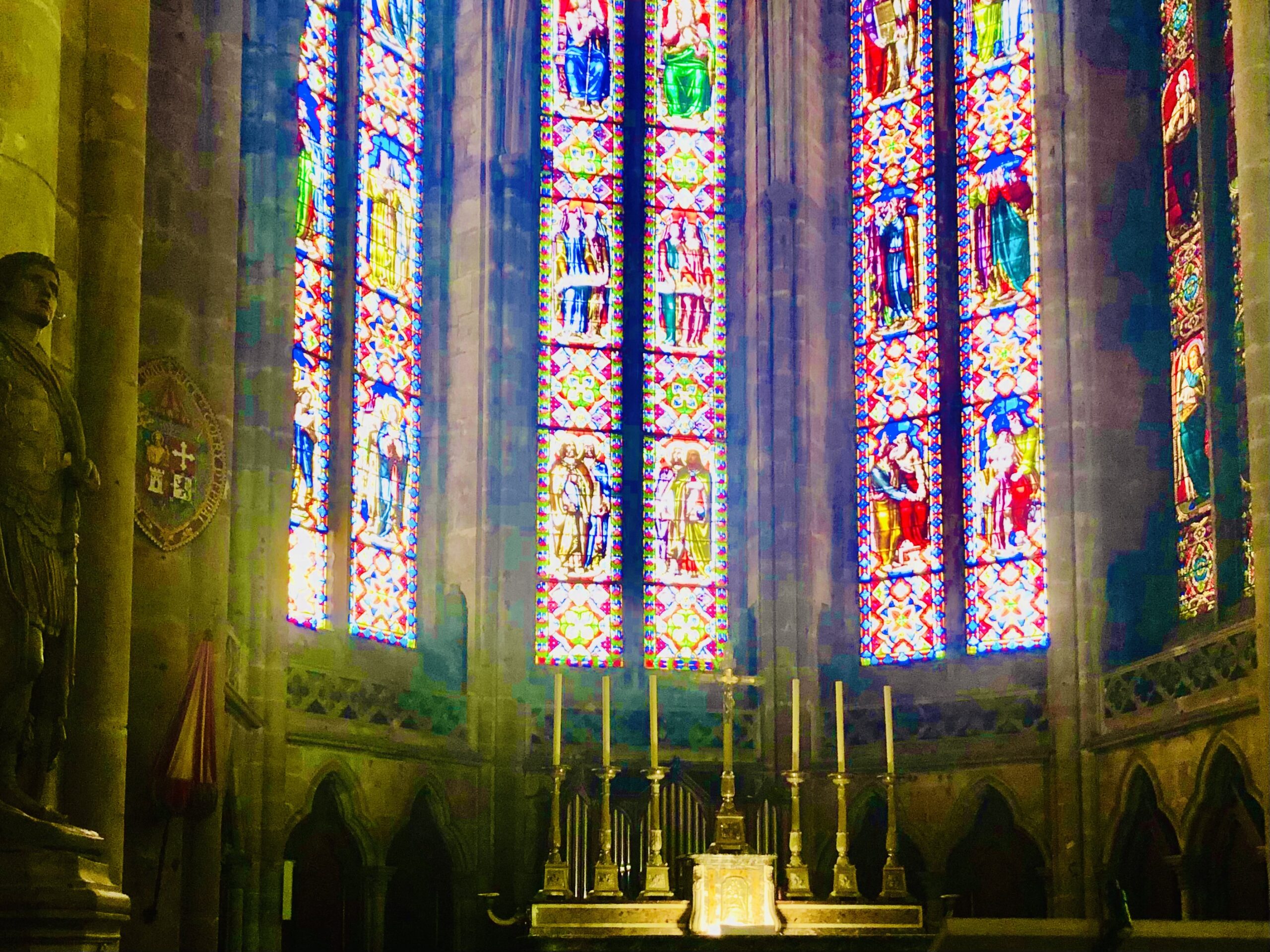
Religion
In which language is the Bible actually written?
Das Alte Testament wurde auf Althebräisch und Aramäisch geschrieben, das Neue Testament auf Altgriechisch. Das Alte Testament wurde auch (mit einigen zusätzlichen Texten, den Apokryphen) ins Griechische übersetzt. Dies ist die Septuaginta. Die gesamte Bibel wurde zudem ins Latein übersetzt: die Vulgata. Wer also die Worte der Evangelien im Original lesen möchte, liest sie auf Griechisch.
But the Greek pantheon, too, can enrich our lives in many ways. For it connects us to a reality that is alive through and through, one that allows us to marvel once again at the wonders of nature.
Understanding ourselves…
... in the other. We have now reached a point where only a narrow path connects us to the historical legacy of antiquity. Yet antiquity helps us to understand who we are. Through the lens of ancient literature, we recognise both the similarities and differences between ourselves and the people of antiquity. The differences relate to incidental matters, whilst the similarities pertain to what is essentially human.
Let’s talk about antiquity…
The Gym
The gymnasium (τὸ γυμνάσιον) was a sports ground in the Greek polis. The name is derived from the adjective γυμνός (naked, scantily clad), as gymnastics was practised in this manner. In the shaded colonnade surrounding the gymnasium, young people could learn from their elders during their leisure time, the σχολή – from which the term ‘school’ derives. In this sense, learning was not a tedious chore, but a refreshing leisure activity. The modern ‘Gym’ was also named after this place of sport and learning.
Blog
Here you’ll find inspired and, hopefully, equally inspiring articles on philosophy, philology and whatever else captures our interest.
-
What actually is knowledge?
Of course, we all have a rough idea of what we mean when we talk about knowledge…
